
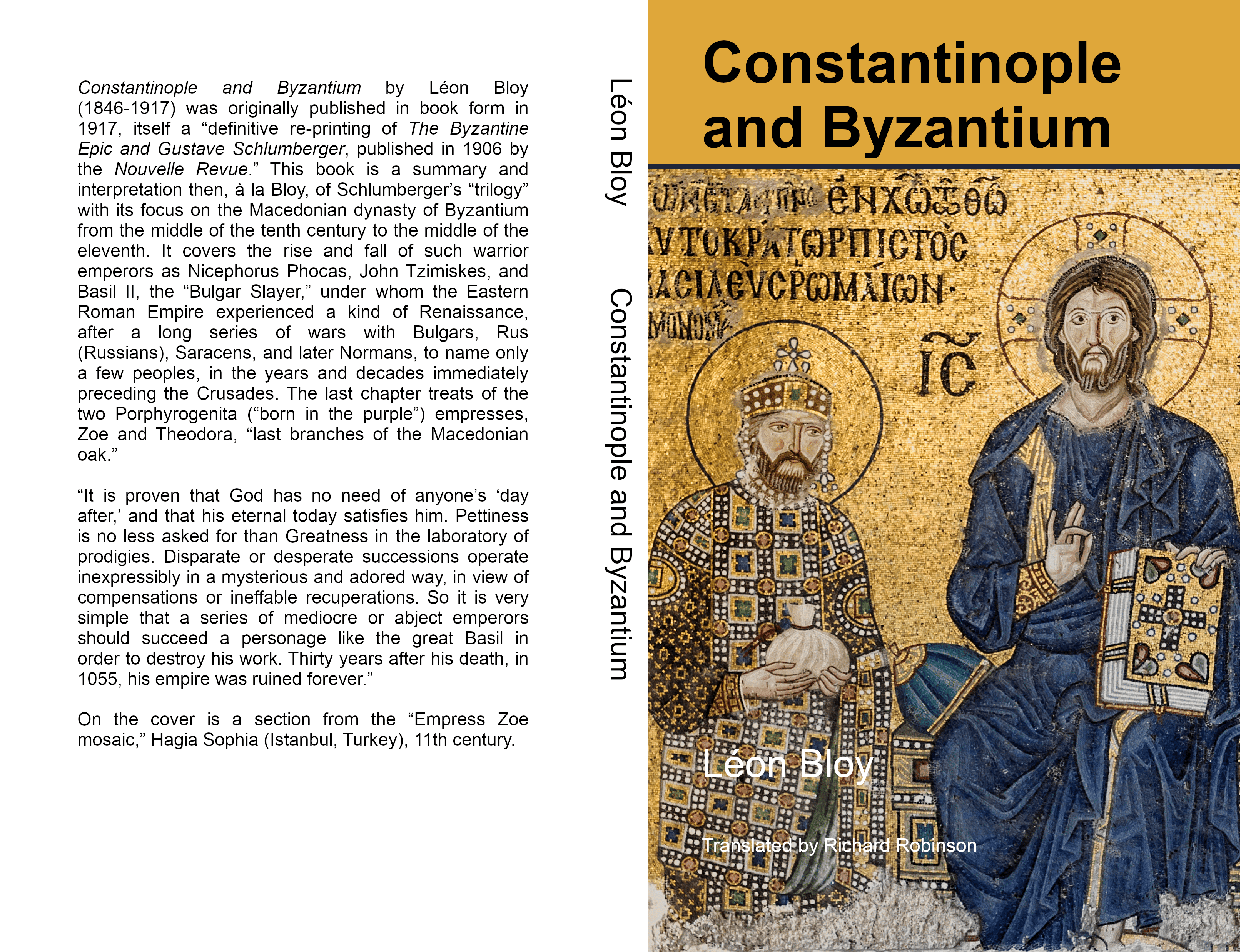
Constantinople and Byzantium
Constantinople and Byzantium by Léon Bloy (1846-1917), a notable work among Catholic literature, was originally published in book form in 1917. This edition serves as a definitive re-printing of The Byzantine Epic and Gustave Schlumberger, which was published in 1906 by the Nouvelle Revue. In this insightful book, Léon Bloy offers a summary and interpretation of Schlumberger's 'trilogy,' focusing on the Macedonian dynasty of Byzantium from the middle of the tenth century to the middle of the eleventh. It explores the rise and fall of warrior emperors such as Nicephorus Phocas, John Tzimiskes, and Basil II, famously known as the 'Bulgar Slayer.' Under Basil II, the Eastern Roman Empire saw a remarkable Renaissance following an extensive series of conflicts with various groups, including Bulgars, Rus (Russians), Saracens, and later Normans, right before the Crusades. The final chapter delves into the lives of the two Porphyrogenita ('born in the purple') empresses, Zoe and Theodora, who are regarded as the last branches of the Macedonian oak.
“It is proven that God has no need of anyoneʼs ʻday after,ʼ and that his eternal todaysatisfies him. Pettiness is no less asked for than Greatness in the laboratory of prodigies. Disparate or desperate successions operate inexpressibly in a mysterious and adored way, in view of compensations or ineffable recuperations. So it is very simple that a series of mediocre or abject emperors should succeed a personage like the great Basil in order to destroy his work. Thirty years after his death, in 1055, his empire was ruined forever.”
View on Amazon